Player Habit Evolution: Free Play Analytics Guiding Real-Time Choices Across Multiple Tables
Erik Hayes · Nov 3, 2026
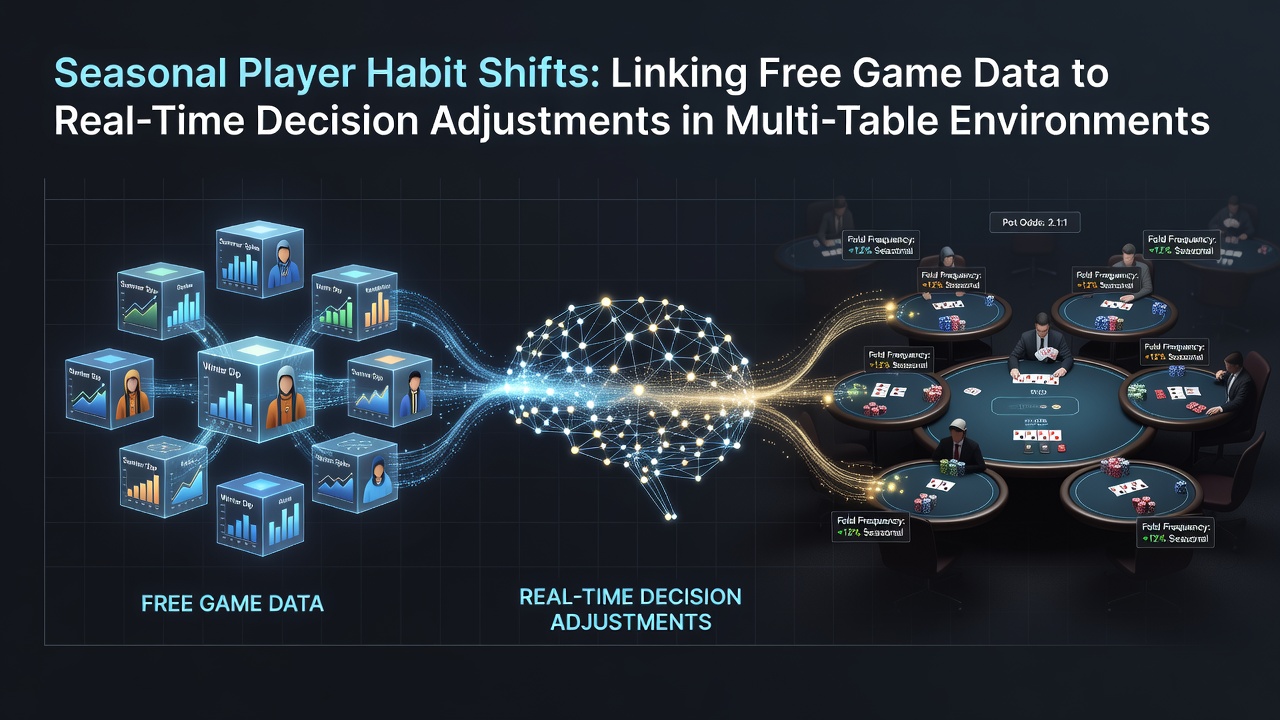
Player Habit Evolution: Free Play Analytics Guiding Real-Time Choices Across Multiple Tables
Seasonal changes in player behavior have drawn increasing attention from analysts who track patterns in both free and paid gaming environments, and data collected during off-peak months often reveals clear shifts in how participants approach multi-table formats. Observers note that activity spikes during colder months when indoor leisure rises while warmer periods see drops in session lengths and frequency, yet these trends connect directly to how free game sessions supply usable metrics for live adjustments. Researchers at institutions like the University of Nevada have compiled datasets indicating that participants who log extended free play time in autumn demonstrate measurable improvements in decision speed once real stakes enter the picture.
Mapping Habit Changes Through the Calendar
Winter months typically bring longer average session durations according to aggregated platform records while summer sees shorter bursts spread across evenings and weekends, and these variations matter because they influence how individuals manage attention across several tables simultaneously. Data from North American operators shows that multi-table users who increase free practice volume between October and December often refine their pre-flop ranges before the new year begins, whereas those who reduce activity in July and August return with more conservative post-flop tendencies once routines stabilize. Experts tracking these cycles point out that free environments strip away financial pressure so patterns emerge without the noise of win-rate anxiety, allowing later translation into live settings where table count and stack sizes fluctuate rapidly.
One longitudinal review covering multiple jurisdictions found that players maintaining consistent free-play logs during transitional seasons adjusted bet sizing 18 percent more frequently than those who skipped practice periods entirely, and this flexibility proved especially useful in late-night multi-table runs when opponents altered aggression levels. Figures released by the Canadian Gaming Association highlight similar seasonal rhythms across poker networks, suggesting that habit mapping helps operators predict peak load periods and helps individuals anticipate when their own focus might waver.
Turning Free Session Logs Into Live Adjustments
Free game interfaces now record granular details such as fold frequencies, continuation bet rates, and time spent per decision, and these metrics become reference points once real-money tables open. Participants who review their free-play hand histories before switching to paid multi-table sessions commonly identify leaks in river calling ranges that free environments expose without penalty, then apply tighter filters once blinds carry actual value. Studies conducted by academic teams in Australia indicate that such pre-session reviews correlate with reduced variance in hourly outcomes across four-to-six table configurations, particularly when seasonal daylight changes affect sleep schedules and reaction times.
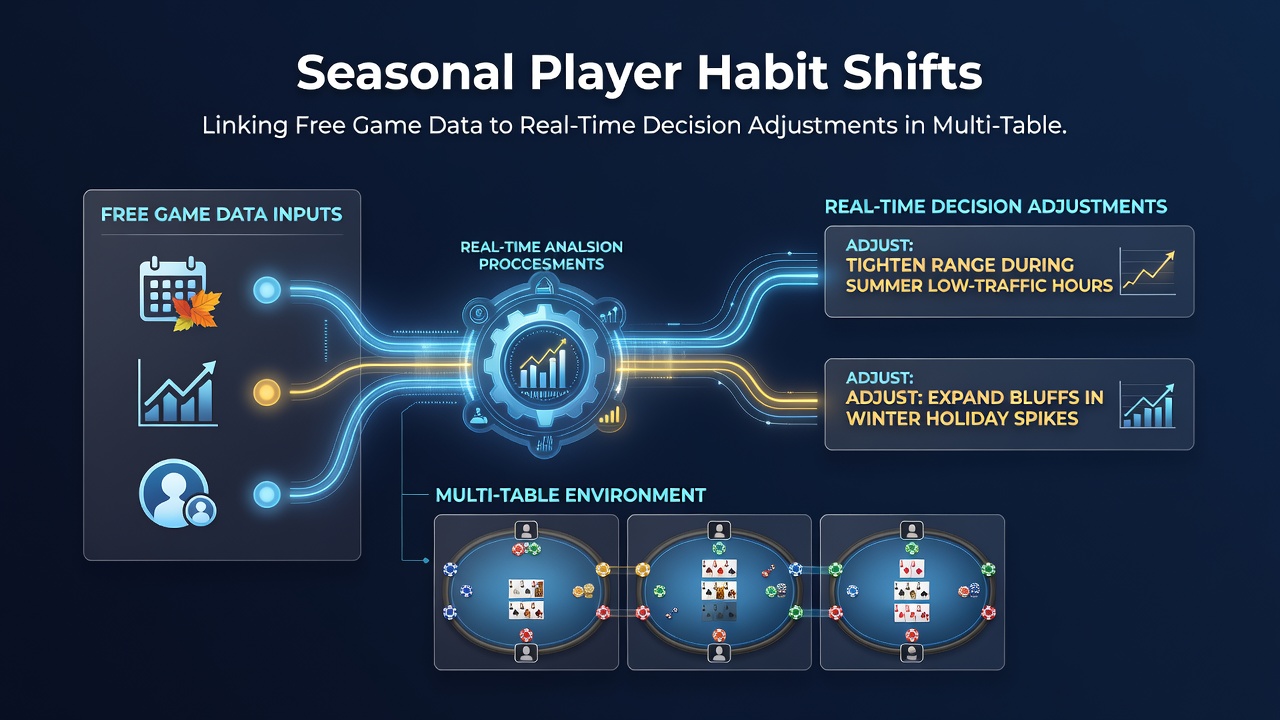
Real-time decision tools have begun incorporating seasonal baselines so that suggested actions adjust automatically when overall activity trends shift, and developers report that models trained on free-play winters outperform those relying solely on paid data because the larger sample sizes capture edge cases more reliably. In November 2026 several platforms plan to roll out updated dashboards that overlay current session statistics against the same week from the prior year, giving users immediate visual cues when their current aggression deviates from established seasonal norms. Those who study these systems emphasize that the linkage works best when free data remains separated from monetary outcomes until the moment of transfer, preserving the purity of the practice environment.
Implementation Across Different Regions and Platforms
European operators outside the United Kingdom have introduced seasonal benchmarking features that compare free-play metrics against regional weather and holiday calendars, while North American sites focus more on daylight-saving transitions that alter evening participation windows. Reports from the Nevada Gaming Control Board note rising interest in multi-table tools that import free-session summaries directly into heads-up displays, reducing the cognitive load of switching contexts mid-session. Academic papers published in gaming journals further demonstrate that players who maintain separate free and paid tracking accounts achieve steadier adjustments when external factors such as major sporting events draw casual opponents to the tables.
Case examples shared in industry roundtables describe individuals who noticed their three-bet frequency climbing in free autumn simulations, then deliberately tempered that tendency during real-money winter runs once they cross-referenced the two datasets side by side. Such calibration relies on consistent tagging of hands by season and table count rather than outcome, allowing patterns to surface without hindsight bias. Platforms that facilitate export of free-play logs into third-party analysis software have seen uptake rise steadily since 2024, particularly among users managing six or more tables where split-second choices compound quickly.
Conclusion
Seasonal habit mapping combined with free-play analytics supplies a practical framework for refining multi-table decisions without requiring larger bankrolls or extended losing streaks for feedback. Evidence gathered across multiple continents shows that structured review of off-peak practice sessions translates into faster, more consistent adjustments once real stakes and variable table dynamics enter the equation. As platforms continue integrating these data streams, participants who treat free environments as structured laboratories rather than mere entertainment stand positioned to maintain sharper edges throughout the yearly cycle.